
100% pure woolMaterial clearly explained
MarocCarpets knowledge base
Handmade Moroccan rugs: how to recognise quality
An authentic Berber rug needn’t be perfectly straight or exactly symmetrical. Its material, craftsmanship, and finish speak volumes about its quality.
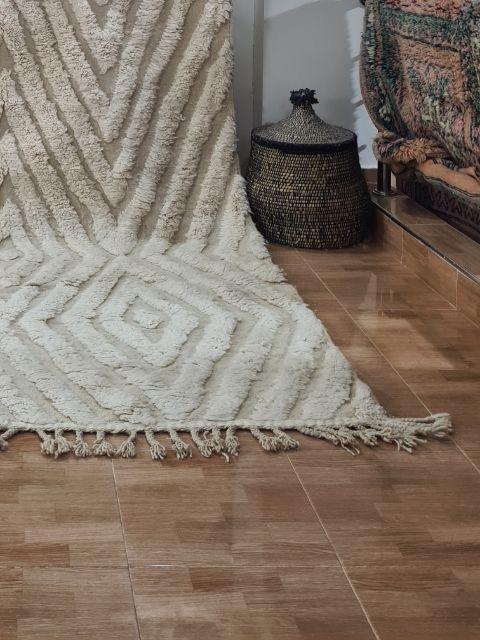

Handmade in MoroccoProvenance and craftsmanship showcased
Personally inspectedSize, colour and finish agreed beforehand
A handmade Moroccan rug is an investment for years to come. It should not only photograph beautifully but also feel delightful, be robustly crafted, and suit the room’s use.
1. Begin with the wool and fibre
Quality wool feels vibrant and resilient. Softness differs by type: a plush Beni Ourain contrasts with the dense knots of a M’rirt or the flat weave of a Zanafi.
Tip: Request detailed photos of the pile, sides, and back. Together, they reveal more than a single interior shot.
2. Inspect the reverse
The back shows the construction. Minor variations are typical in handmade pieces. You can observe the knotting or weaving rhythm and occasional tension differences.
3. Irregularity does not equal defect
Patterns may shift slightly and widths vary by a few centimetres. Natural variation appears harmonious; poor finishing is seen in loose edges, weak spots, or instability.
4. Examine edges and fringes
Edges protect the structure and should be securely finished. Fringes may extend from the foundation threads on one or both sides.
5. Inquire about origin and production
A trustworthy seller will explain the rug type, materials used, and whether it is new, vintage, or bespoke.
Would you like to compare the wool textures yourself? Explore the Beni Ourain, Azilal and Zanafi/Kilim material samples. These are material samples to feel the texture, not colour samples.
Quick quality check
- Is the material clearly specified?
- Are front and back views shown?
- Are dimensions, pile height and variations detailed?
- Is delivery, inspection and warranty information provided?
Frequently asked questions
Is a slightly uneven edge normal?
Small deviations are normal in handmade rugs. Significant distortion or fragile edges warrant closer scrutiny.
Why are no two rugs identical?
Wool quality, hand tension, dyeing and knotting all vary. Even identical designs remain truly unique.